

What Hospitality Workflows Should You Own — And Why SaaS Can’t Drive Guest Experience Alone
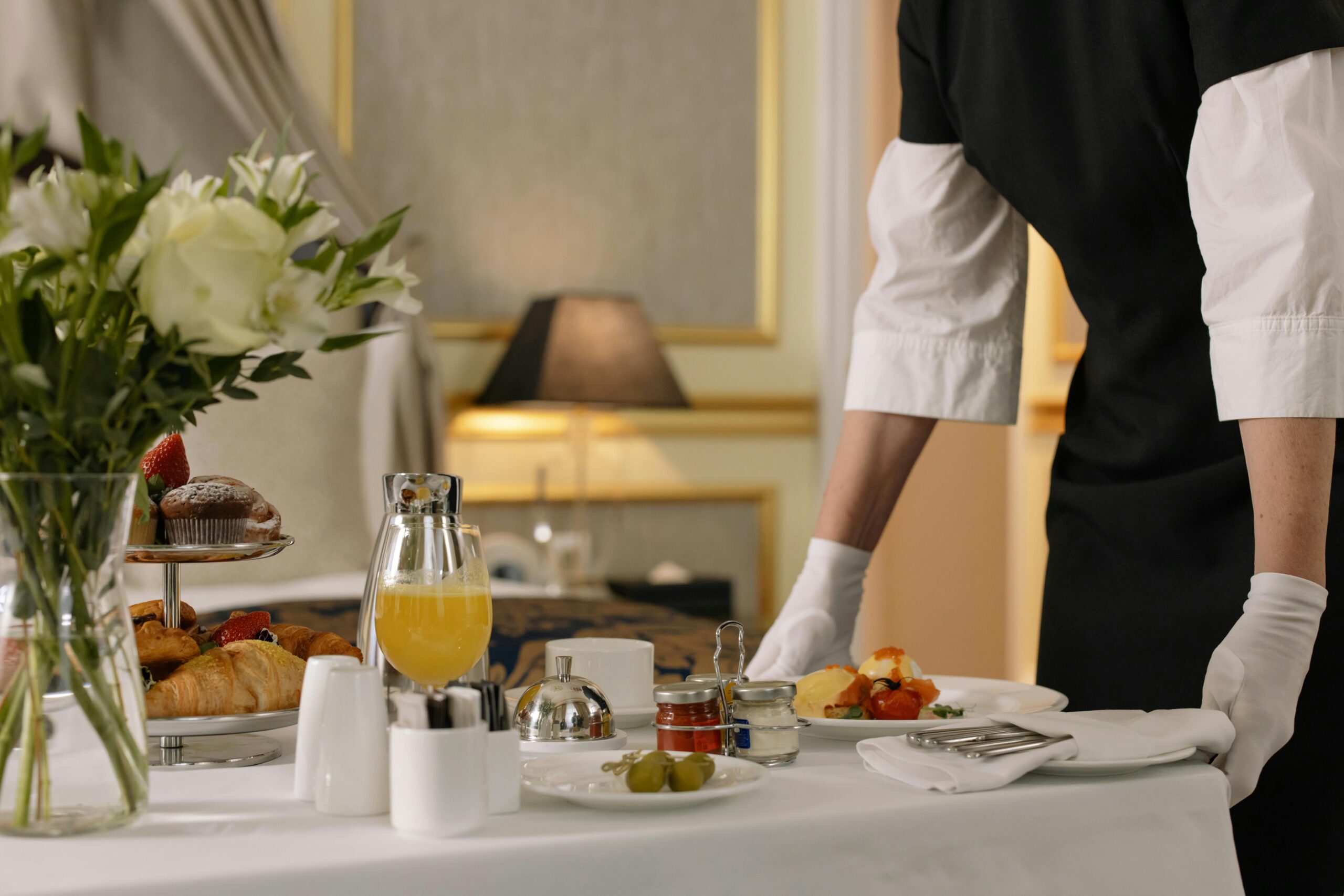
Hospitality doesn’t compete on systems. It competes on experience.
Hotels, resorts, and hospitality brands don’t win because of better tools.
They win because they deliver:
- consistent guest experience
- timely interactions
- relevant offers
- smooth journeys across touchpoints
And all of this depends on how workflows are structured across the guest journey.
Yet most organizations rely on SaaS systems to define those workflows.
That is where the problem begins.
For a broader model behind this shift: https://firstlinesoftware.com/from-saas-spend-to-owned-workflows/
The hidden issue: SaaS defines the guest journey
Hospitality companies operate across a SaaS stack:
- booking platforms
- PMS
- CRM
- marketing tools
Each system performs well in isolation.
But guest experience is not isolated.
It is a continuous journey:
- discovery → booking → pre-arrival → stay → post-stay
When SaaS systems define how each step works:
- the journey becomes fragmented
- context is lost between interactions
- experience becomes inconsistent
No system owns the full journey.
So no system ensures the outcome.
The real question is not “build vs buy”
Most organizations frame decisions as:
- build vs buy
- custom vs SaaS
But this misses the point.
The real question is:
Which parts of the guest journey must we control to influence experience and revenue?
This is not a technology decision.
It is a control and growth decision.
Hospitality workflows are not equal
To move forward, workflows must be separated.
1. Commodity workflows (keep in SaaS)
Examples:
- accounting
- reporting
- internal admin processes
They:
- are standardized
- do not impact guest experience directly
SaaS works well here.
2. Operational workflows (coordinate, not own fully)
Examples:
- housekeeping coordination
- internal operations
- staff scheduling
They:
- support service delivery
- vary across properties
These often require orchestration across systems.
3. Experience workflows (must be owned)
These define business outcomes:
- guest journey orchestration
- personalization across touchpoints
- pricing and offer decisions
- service triggers during the stay
These workflows:
- shape guest perception
- influence revenue per guest
- determine consistency
If these are controlled by SaaS systems,
the company does not control its own experience.
Why SaaS cannot manage experience workflows
SaaS platforms are built to:
- standardize functionality
- scale across customers
But experience workflows require:
- adaptation to context
- coordination across systems
- real-time decision-making
When these workflows are left inside SaaS:
- logic is fragmented
- data is inconsistent
- decisions are delayed
This limits:
- personalization
- responsiveness
- consistency across properties
This is where Digital Experience (DX) becomes critical
Digital Experience is often misunderstood as UX or front-end design.
In reality, it is a system for managing experience as a business function.
In hospitality, DX means:
- structuring the guest journey as a system
- connecting data across touchpoints
- embedding decisions into workflows
- ensuring consistency across channels
It turns experience into something that can be:
- measured
- managed
- improved
—not left to chance.
(See how DX is structured as a system: https://firstlinesoftware.com/digital-experience/).
From SaaS-defined journeys to owned experience systems
Leading hospitality organizations are shifting their approach.
They are not removing SaaS.
They are redefining its role.
Instead of letting SaaS define workflows, they:
- define the guest journey as a system
- own critical workflows
- use SaaS as components
This creates:
- continuity across interactions
- control over decision-making
- ability to adapt quickly
More on this transition: https://firstlinesoftware.com/from-saas-spend-to-owned-workflows/
Where to start: focus on guest journey control
Most companies don’t need to transform everything.
They should start with:
- guest journey orchestration
- personalization logic
These areas:
- expose fragmentation clearly
- directly impact experience
- influence revenue
By restructuring them:
- SaaS dependency decreases
- experience becomes consistent
- decisions become faster
What changes when experience workflows are owned
When hospitality companies own their workflows:
- guest experience becomes consistent across channels
- interactions are context-aware
- teams operate within a unified system
Most importantly:
experience becomes a managed system — not an emergent outcome.
Closing perspective
Hospitality is not a technology business.
It is an experience business.
SaaS can support operations.
But it cannot own the experience.
The question is not:
“What tools should we use?”
It is:
“Which parts of the guest journey must we control?”
To understand how organizations structure this shift: https://firstlinesoftware.com/from-saas-spend-to-owned-workflows/
Q2 2026
FAQ: Hospitality Workflows, SaaS, and Digital Experience
What are hospitality workflows?
Hospitality workflows are processes that define how guest interactions happen across the journey — from booking to post-stay engagement.
Which workflows should hospitality companies own?
Workflows that shape guest experience — such as journey orchestration, personalization, and pricing decisions — should be owned.
Why can’t SaaS systems manage guest experience effectively?
Because SaaS systems operate independently and optimize functions, not end-to-end journeys. Guest experience requires coordination across systems.
What is Digital Experience (DX) in hospitality?
DX is a system that connects data, workflows, and decision-making to manage guest experience as a measurable and controllable business function.
Learn more: https://firstlinesoftware.com/digital-experience/
Do we need to replace SaaS systems?
No. SaaS should support workflows, not define them. The focus should be on owning critical workflows while keeping SaaS for standard functions.
What is the first step toward improving guest experience systems?
Map the full guest journey and identify where systems break continuity. This reveals where workflows need to be structured and owned.
More details: https://firstlinesoftware.com/from-saas-spend-to-owned-workflows/