

Will Robots Replace Humans in Manufacturing?
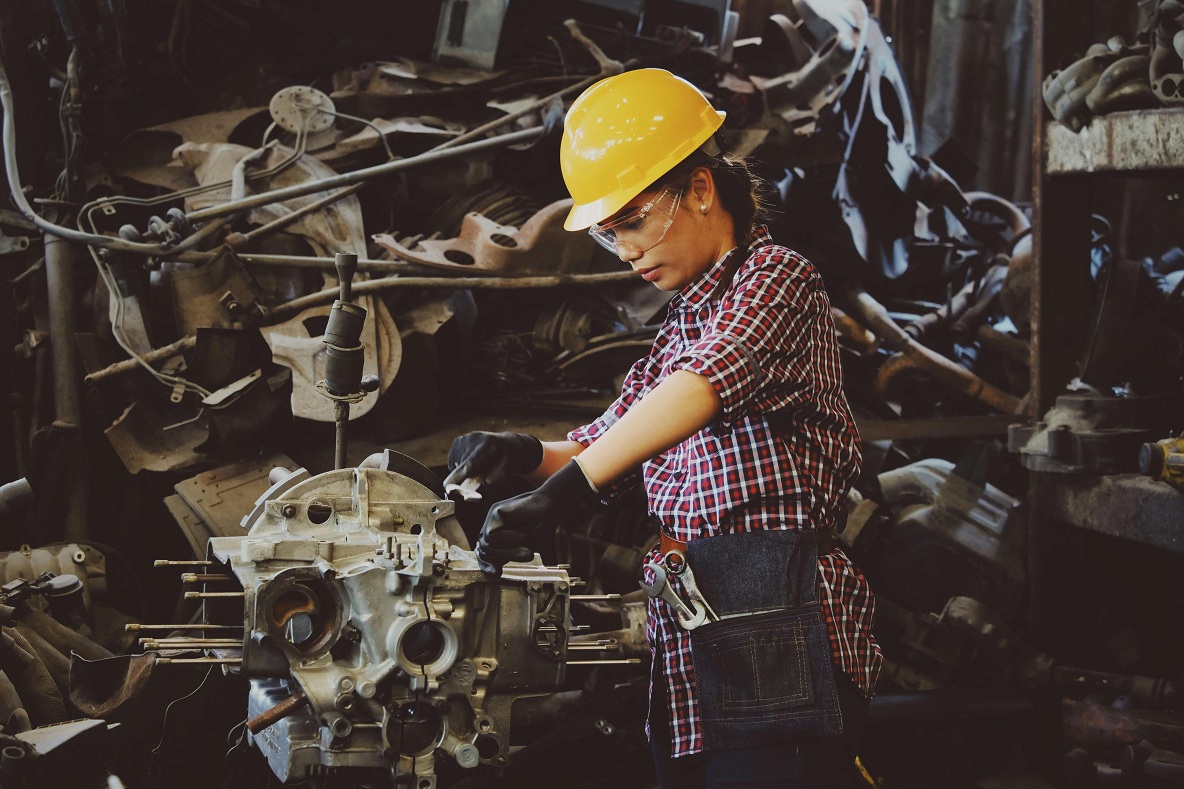
In 2025, the manufacturing sector is experiencing its biggest transformation since the first industrial revolution. To become a leading automated nation, there are competitions in artificial intelligence, robotics, and other similar fields. The goal of automation-focused nations is to effectively and efficiently reduce workloads while increasing productivity.
But the key question persists: Will robots replace humans?
The answer is clear – robots are transforming work, not eliminating it. The future belongs to manufacturers who can integrate intelligent automation with human creativity, adaptability, and new workforce roles.
What the Research Indicates
While studies from the last five years indicated a gradual increase in robot adoption and a 4% labor shortfall by 2030, here’s what the research shows in 2025:
- The market for robots and AI-enabled machines in manufacturing is surging, driven by lower hardware costs, improved AI capabilities, and demand for flexibility.
- More than half of manufacturers are integrating AI-powered quality-control and predictive-maintenance systems.
- The global robotics-industry body, International Federation of Robotics (IFR), lists “AI – physical, analytical, generative” as one of the top drivers for 2025.
In short, the momentum is real. But this doesn’t mean humans vanish; rather, their roles shift and new patterns of work emerge.
The Robots’ (and AI) Ongoing Development
South Korea remains one of the most automated nations in the world. According to the International Federation of Robotics, it now has the highest industrial robot density globally, with around 1,012 robots per 10,000 manufacturing employees—roughly one robot for every ten workers, far above the global average of 162.
South Korea is also frequently cited in discussions about a future robot tax. Rather than a direct tax on robots, the government reduced tax incentives for automation investments in 2017, a move many interpreted as an early step toward taxing automation to slow job displacement and protect the tax base.
The key question for policymakers and manufacturers is still which jobs robots should do and which jobs must stay human-centric. In automotive manufacturing, for example, paint and body operations are now heavily automated. Robots handle tasks like spraying, sanding, and polishing, which are repetitive, ergonomically demanding, and often involve exposure to chemicals—exactly the kind of work robots excel at and humans should avoid.
However, final assembly remains highly dependent on human workers. Today’s vehicles can have tens of thousands of components, plus a growing range of customization options—from advanced infotainment to ambient lighting and integrated sensors. That variety still demands human flexibility, dexterity, and fast problem-solving. Even in cutting-edge plants, such as Hyundai’s new EV factory in Georgia, hundreds of robots work alongside more human workers than ever, with people handling nuanced tasks like finishing, fitting, and quality inspection.
At the same time, research shows that lower-skilled regions and workers are more vulnerable to displacement when robots are deployed aggressively. Studies from Wharton find that robots disproportionately affect low-skill roles and can widen regional inequality and political polarization if reskilling and transition support are weak. Workers leaving manufacturing often move into transportation, construction, maintenance, or basic office roles—many of which are themselves increasingly exposed to automation and AI.
Despite these risks, the sentiment in the manufacturing industry remains cautiously optimistic. A widely cited survey by Veo Robotics found that 57% of manufacturers believe robots are not replacing human workers but are instead working alongside them, augmenting power and precision. Post-pandemic, this pattern has only strengthened: as manufacturers continue to battle labour shortages, supply chain volatility, and cost pressure, most are looking to automate the most repetitive, dangerous, and low-value tasks, while keeping humans in roles that require judgment, coordination, and adaptation.
In practice, this means that the typical factory of 2025 is neither fully automated nor purely human-run. It is a hybrid environment where robots handle hazardous or intensely repetitive work, and humans focus on supervision, customisation, problem-solving, and continuous improvement—provided companies invest in training and change management to make that collaboration sustainable.
Key shifts include:
- Physical AI: Robots with embedded perception, decision-making, and manipulation capabilities (often powered by generative AI).
- Humanoid and general-purpose machines: Some manufacturers and robotics firms are testing humanoid robots for tasks beyond conventional robotic cells.
- Robots-as-a-Service (RaaS): Modular automation models are making automation more accessible to small- and medium-sized manufacturers.
- Sustainability and resilience: Robots with energy-efficient designs, digital twins for lifecycle monitoring, and systems built to tolerate supply-chain disruption.
These developments show that robots are increasingly capable of dynamic tasks, learning from their environments, and working more flexibly than ever.
Humans and Robots in Tandem
One of the most consistent findings remains that automation tends to augment rather than fully replace humans — especially in complex or variable manufacturing contexts. Automation is now deeply embedded across manufacturing, retail, logistics, healthcare, and even professional services. Industrial robots are working alongside humans in automotive plants and electronics factories, while service robots are increasingly present in hospitals, warehouses, and labs. The International Federation of Robotics reports a record 4.28 million industrial robots operating in factories worldwide as of 2024, with annual installations exceeding half a million units for the third consecutive year.
In healthcare, robotic and AI-assisted systems have moved well beyond early pilots. Recent studies show rapid adoption of AI-assisted robotic surgery across multiple specialties, driven by gains in precision and lower complication rates. In 2024, the FDA approved the Symani surgical robot for microsurgery, designed to filter out human hand tremors in delicate procedures—an example of robots augmenting, rather than replacing, highly skilled surgeons.
Post-pandemic, investment trends clearly show that organizations are doubling down on automation. Global automation spending reached an estimated $201 billion in mid-2023, up about 15% year over year, with manufacturing accounting for roughly 40% of that total. Research on “intelligent manufacturing” also finds that companies investing in advanced automation and AI capabilities tend to grow faster in the post-COVID environment, particularly when they pair technology with innovation and government or ecosystem support.
As automation spreads, the workplace itself has to evolve. Human–robot collaboration (HRC) is now a central concept in both Industry 4.0 and the emerging Industry 5.0 vision, where technology is designed around human needs. Manufacturers are creating shared workstations where humans and collaborative robots (“cobots”) operate in close proximity, maximizing floor space while combining human flexibility with robotic precision. Cobots already account for about 11% of all industrial robot installations, and their market is projected to grow more than 30% annually as small and mid-sized firms adopt them.
In most cases, robots are enhancing human roles instead of eliminating them. Automation takes over repetitive, physically demanding, or hazardous tasks, freeing people to focus on more complex work: interacting with customers and suppliers, improving processes, engineering better products, interpreting data, and increasingly servicing and supervising the robots themselves. Studies in warehouse and logistics operations show that blending human labor with robotics often delivers higher throughput and resilience than attempting full automation, with embodied AI systems like humanoid and mobile robots handling heavy transport while humans manage exceptions and coordination.
Given this trajectory, it’s no surprise that human–robot interaction has surged in factories, warehouses, and hospitals over the last few years. As manufacturers accelerate automation to navigate labor shortages, inflationary pressure, and ongoing supply-chain disruptions, the typical workplace is becoming a hybrid environment where human and automated coworkers interact constantly—each doing what they do best.
Customization, Flexibility & Speed
In 2025, the automotive industry is still the single largest user of industrial robots, accounting for roughly 30% of all installations worldwide. Highly automated plants now routinely deploy hundreds or even thousands of robots for welding, painting, and material handling.
Take the Tesla Fremont Factory in California as an example. Tesla has invested heavily in robotics, purchasing more than 1,000 robots to automate tasks from welding to painting and parts handling. Even with that level of automation, the plant produced nearly 560,000 vehicles in 2023 and still employs around 20,000 people, making it the largest auto manufacturing facility in the United States by output. Robots have scaled production, not eliminated the need for a large human workforce.
A similar pattern appears at BMW’s Spartanburg plant in South Carolina, where more than 2,000 high-tech robots operate in the body shop alone, yet around 1,000 team members are still needed to assemble about 1,450 cars per day. These plants build highly customizable SUVs and EVs with countless combinations of trims, options, and software features — a level of variety that still benefits from human flexibility and problem-solving.
Why are 1,000+ people still required in such automated environments?
Modern vehicles are intensely personalized: powertrains, interiors, software packages, color and trim options, and feature bundles can generate thousands of unique build combinations. Research on mass customization in Industry 4.0 shows that, although advanced automation and digital connectivity make flexible production possible, human workers remain critical for changeovers, exception handling, prototype work, and continuous improvement. Constantly reprogramming or retooling robots for every small configuration change can be costly and time-consuming; in many cases, skilled human operators can adapt faster and more economically.
Investments by other automakers underscore this hybrid approach. At Toyota’s Georgetown, Kentucky complex, for example, the company is spending $922 million on a new, highly automated paint facility designed to expand color options, cut emissions by 30%, and reduce water usage — yet no new jobs are added, because the aim is to modernize and secure existing roles, not remove them.
The lesson for manufacturers is clear:
- Automation should be applied surgically, where it solves specific pain points (safety, quality, or repeatability), rather than as a blanket replacement of entire workforces.
- Human adaptability is still the best “reconfiguration tool” when product lines change frequently, or customization is central to the brand.
Even though automation will continue to transform manufacturing, the experience of leading carmakers suggests that change is most successful when it is gradual and problem-driven. Rather than automating huge portions of operations simply in the name of efficiency, managers should start by targeting concrete bottlenecks — and recognize that, in many cases, the most flexible and cost-effective solution is still a well-trained human team working with robots, not instead of them.
Why Robots Might Not Fully Replace Humans
While many tasks are automatable, full replacement of human labour in manufacturing remains unlikely (and arguably undesirable) for these reasons:
- Economic and social costs: Large-scale replacement of humans without transition strategies can lead to disenfranchisement, skills gaps, and supply-chain fragility.
- Flexibility: Humans adapt more rapidly to new tasks, custom orders, unstructured environments, and anomalies than many current robots.
- Maintenance of human skills: For future resilience, companies will want humans who understand processes, can innovate, troubleshoot, and drive continuous improvement.
- Ethical, regulatory, and social concerns: Automation introduces new risks (job displacement, surveillance, worker alienation, data bias). Manufacturers and policymakers must plan for fair transitions, transparency, and worker dignity.
Why humans still matter:
- Customization: As product variants proliferate, human workers excel in adaptation, decision-making, and changeovers.
- Supervision, maintenance, and exception-handling: Robots may handle standard tasks, but humans handle anomalies, quality issues, new set-ups and continuous improvement.
- Soft skills, creativity, and problem-solving: Humans excel in innovation, cross-team coordination, and change management — roles difficult to automate fully.
- Ethical, environmental, and social dimensions: Humans are needed to oversee safety, fairness, worker well-being, and transitions in skill-sets.
What This Means for Manufacturers & Workforce Strategy
For manufacturers
- Adopt a human-plus-machine mindset rather than “machines will replace humans.”
- Invest in change management, work-design, and hybrid workflows: re-design tasks to combine human judgement + machine execution.
- Build scalable automation strategies: start with pilot projects, measure ROI (in quality, uptime, flexibility), and scale where successful.
- Use AI-powered systems not just for productivity but for resilience, sustainability, and responsiveness. In 2025, these are key competitive dimensions.
- Consider skills, roles, and culture as part of automation programs. Without human-capability investment, automation often under-delivers.
For the workforce and human resources
- Focus on developing digital fluency, problem-solving, collaboration with machines, and continuous learning.
- Create pathways for workers to move into higher-value roles (e.g., automation oversight, quality analytics, human-robot interface design).
- Embed human-centred design and ethics into automation planning: involve workers early, emphasise job quality, design for human-machine ergonomics and safety.
- Recognize geographic/socioeconomic implications: regions with high proportions of low-skilled tasks may require special transition programmes and policy support.
Ethical, Social, and Sustainability Considerations
In 2025, the conversation is expanding beyond “Will the robots replace us?” to “How can we deploy robots and AI in ways that are ethical, inclusive, sustainable, and socially resilient?” Key themes to keep in mind:
- Fairness: Who benefits from automation? Which roles are at risk, and how are workers supported?
- Transparency and trust: How is AI-driven decision-making monitored? Are audit trails in place for machine errors?
- Sustainability: Automation must be designed with energy efficiency, lifecycle planning, and responsible end-of-life in mind.
- Work-design and dignity: Rather than human labour being downgraded to “robot minder,” companies are redesigning work to enhance engagement, autonomy, and meaningful tasks.
- Skills equity and regional impact: Manufacturing automation strategies must consider regional labor markets, possible displacement, and equitable up-skilling opportunities.
2025 Key Trends to Consider
Here are some of the major trends reshaping the manufacturing-robotics landscape:
| Trend | Implication |
| Generalist AI + vision-language-action (VLA) models for robotics | Robots increasingly understand language, vision, and context — enabling broader task sets and less rigid programming. |
| Edge AI + real-time sensing + adaptive robotics | Robots operate with less latency, adapt to dynamic environments, and make decisions on-device rather than rely solely on central systems. |
| Smart supply chains + AI-driven orchestration | Manufacturing isn’t just about robots on the floor. The digital backbone — supply chain, logistics, demand forecasting — is increasingly automated and integrated. |
| Sustainability, circular manufacturing & resource optimisation | Robots and AI contribute to energy optimization, waste reduction, and sustainable manufacturing practices (e.g., optimizing material usage via generative design). |
| Workforce transformation & human-robot work design | The human element remains critical: training, change management, and cultural adaptation are essential. Humans are no longer just operators — they’re collaborators, analysts, and supervisors. |
| Regional and global disparities in automation adoption | Some regions accelerate robotics adoption faster than others, creating labor market and policy consequences (e.g., job displacement risk, re-skilling needs). |
Will Robots Replace Humans? The 2025 Verdict
Will robots replace humans in manufacturing? In 2025, the answer is no, at least not in the simplistic “all machines, no humans” sense. Instead, the shift is toward human-machine teams, where robots and AI absorb structured, repetitive, or hazardous tasks, and humans concentrate on judgment, innovation, design, exception-handling, and continuous improvement. For manufacturers and leaders, the imperative is clear: design not just for machines, but for people + machines. For workers, the call is to evolve skills, embrace hybrid workflows, and engage in shaping the future of manufacturing. For policy-makers and societies, the agenda is to ensure automation delivers productivity, inclusion, and sustainability, rather than disruption, displacement, and inequality.
January 2026
FAQ
Are robots already replacing humans in factories?
Not entirely — they’re automating repetitive or hazardous tasks, allowing humans to focus on higher-value functions.
What industries are leading in AI robotics?
Automotive, electronics, and pharmaceuticals lead adoption, followed by logistics and food processing.
How should companies prepare their workforce?
Invest in continuous learning: robotics safety, AI literacy, and data-driven decision-making.
Will AI make manufacturing jobs disappear?
No — it will reshape them. New hybrid roles (AI technician, digital twin engineer, and robot coordinator) are emerging.
What’s next for 2030?
Expect broader general-purpose robots, autonomous micro-factories, and fully integrated “cognitive supply chains.”
Let’s build the factory of the future — together.