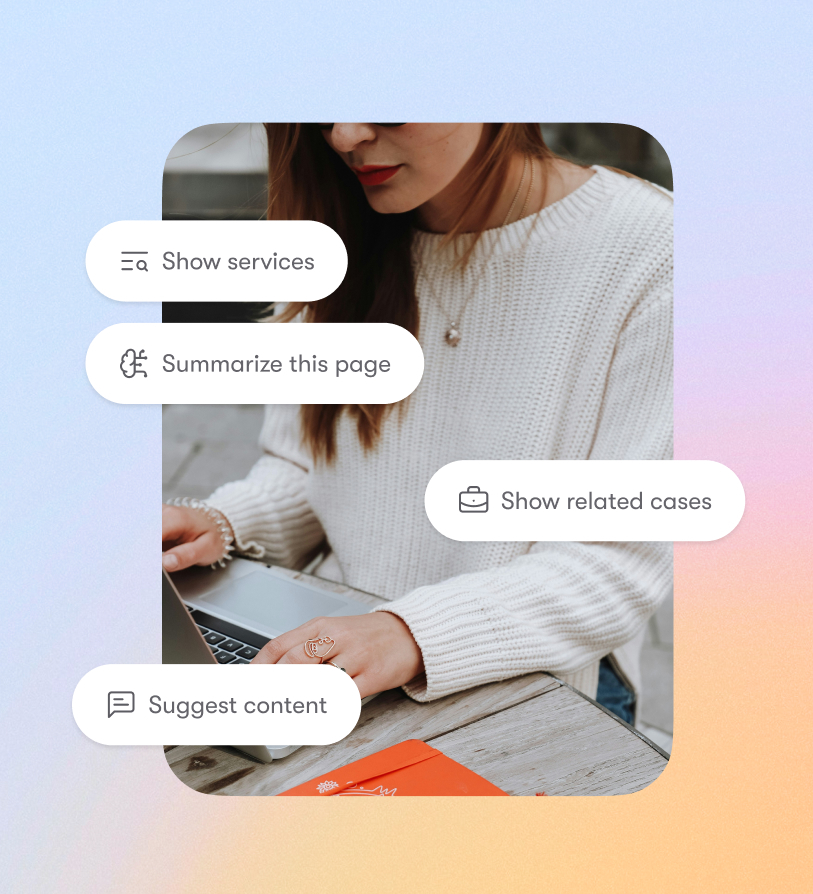

Conversational AI That Supports Real Customer Journeys
AI assistants that help visitors explore, understand, and move forward, directly on your website.
Trusted AI Technology Stack









Where Conversational AI Solves Real Problems
Many organizations experiment with chatbots
but struggle to create meaningful outcomes.
You may have experienced issues like:
Visitors leaving without finding relevant information
Complex service pages that require too much searching
Research-heavy buying journeys that stall without guidance
Customer questions that arrive outside business hours
Conversational AI addresses these problems by turning static content into interactive, guided exploration.
Instead of navigating menus or search results,
visitors can simply ask.
How Conversational AI Improves the Website Experience
A well-designed AI assistant becomes part of the digital experience rather than a separate tool.
Visitors can:
This creates a more natural interaction model where users can discover information through conversation
instead of navigation alone, as described in our approach to conversational AI.
Meet Jaime, Our AI Assistant in Production
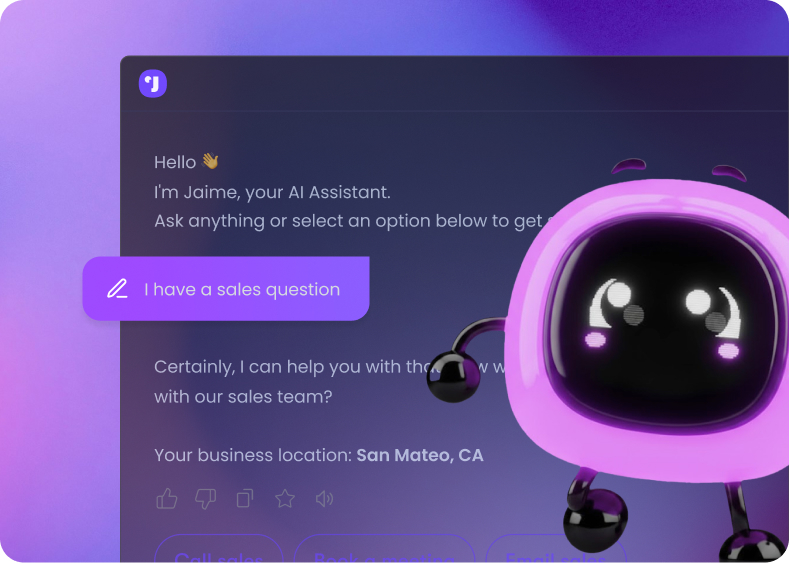
Jaime AI Assistant
Guide Users with Clear, Context-Aware Support
An AI assistant embedded in your website that helps visitors navigate, understand content, and discover relevant next steps.
Intent-aware, multilingual, and built to act as a smart digital guide, not just a chatbot.
Business Impact of Conversational AI
When conversational AI is designed around real user behavior, it supports both customer experience
and internal teams.
Typical outcomes include:
Visitors finding information faster
More structured and guided exploration of services
Reduced friction in early-stage research
Better prepared conversations when users reach out to experts
The goal is not to replace human interaction, but to support the research phase of complex buying journeys.
See Real Use CasesHow We Design Conversational AI Solutions
Our approach focuses on building assistants that are accurate, adaptable, and integrated into real digital experiences, with the following key elements:
Domain knowledge grounding
Ensuring responses are based on trusted content sources.
Composable architecture
Allowing assistants to evolve as models and technologies improve.
Context-aware interaction
Using page context and conversation history to guide interactions.
Flexible interaction models
Supporting text-based conversations today while enabling voice and multimodal interaction as experiences evolve.
Why First Line Software
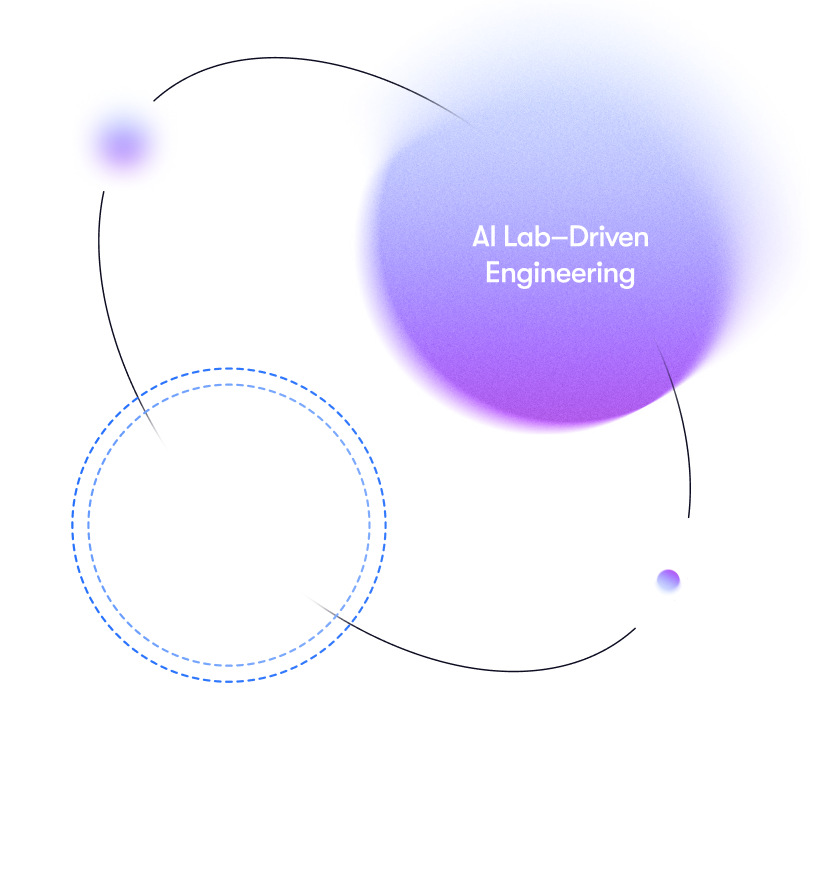
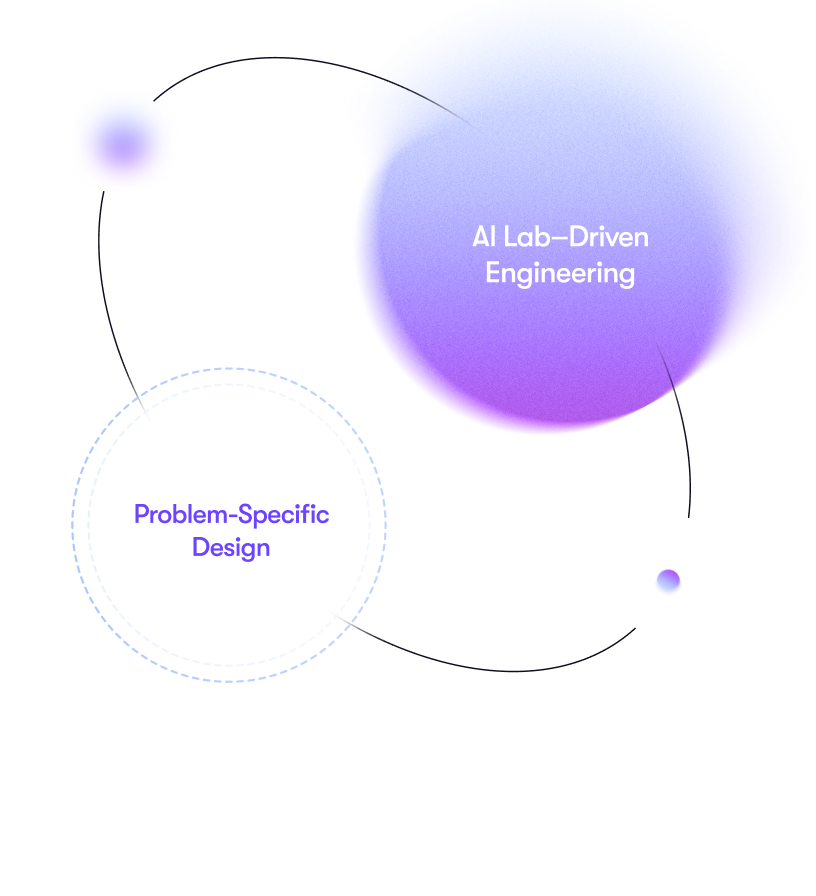
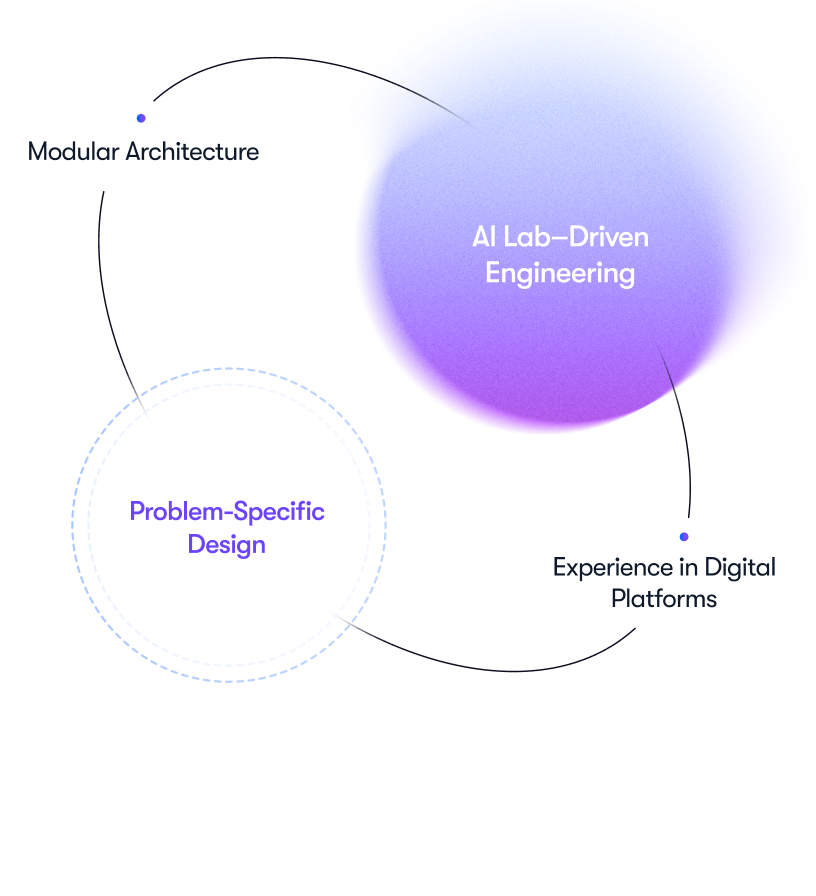
AI Lab–Driven Engineering
We continuously test and evaluate emerging AI models to understand their real capabilities before applying them in production solutions.
Problem-Specific Design
We design conversational assistants around real workflows and user journeys, not generic chatbot templates.
Modular Architecture
Our solutions are designed to evolve over time, supporting new models, interaction types, and integration scenarios.
Experience in Digital Platforms
Conversational AI is most effective when integrated into the broader digital experience, including websites, applications, and customer platforms.
Explore Conversational AI in your
Digital Experience
Conversational AI is most valuable when it helps users move forward — not just when it answers questions.
FAQ: Conversational AI in Practice
What is conversational AI in a business context?
Conversational AI refers to systems that interact in natural language while helping users navigate information, access content, or complete structured interactions within digital platforms.
How is conversational AI different from a chatbot?
Traditional chatbots typically rely on predefined scripts or simple intent matching. Conversational AI systems can adapt responses dynamically and guide users through more complex interactions.
Where is conversational AI most useful?
It is particularly effective in environments where users need to explore complex information, compare services, or navigate large knowledge bases.
Does conversational AI replace human teams?
No. Conversational assistants support early-stage interactions and repetitive information requests, allowing human teams to focus on deeper problem-solving and relationship building.